
ENGLISH VERSION
1. Introduction
The Eisenhower Matrix is a timeless decision-making tool that helps individuals and organizations distinguish between what is urgent and what is important. Originally attributed to U.S. President Dwight D. Eisenhower and later popularized by Stephen Covey, the matrix provides a structured way to prioritize tasks, reduce stress, and focus on long-term value rather than short-term pressure.
2. What the Eisenhower Matrix Is
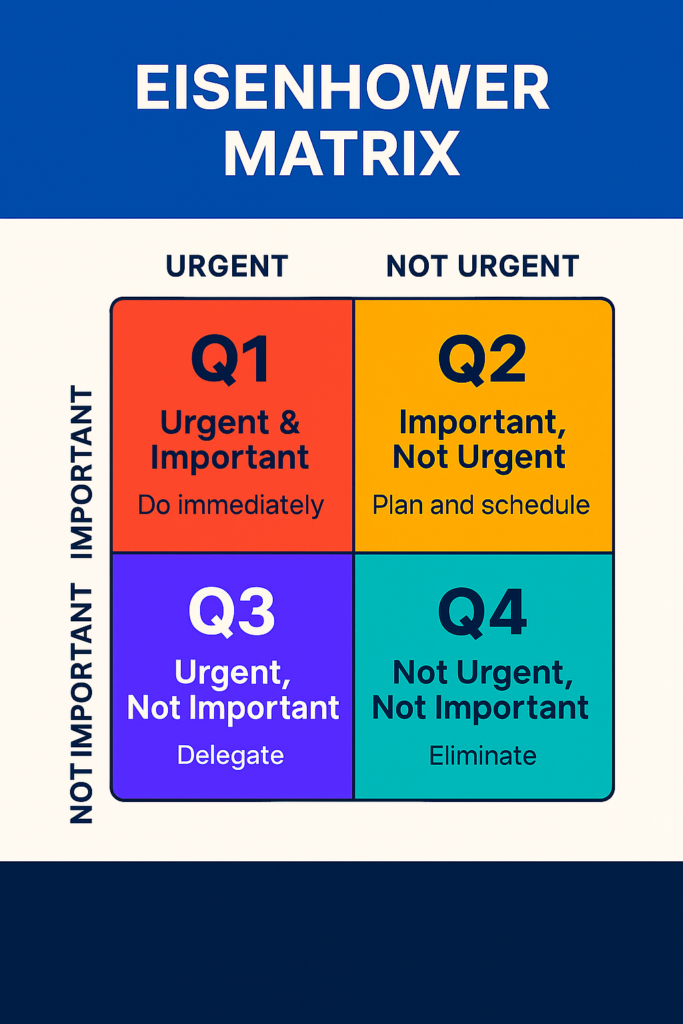
The matrix is a 2×2 quadrant that classifies tasks based on two criteria:
- Urgency — time sensitivity, immediate deadlines, rapid consequences.
- Importance — contribution to long-term goals, values, strategy, or well-being.
The four quadrants are:
- Q1 – Urgent & Important → Do immediately
- Q2 – Important, Not Urgent → Plan and schedule
- Q3 – Urgent, Not Important → Delegate
- Q4 – Not Urgent, Not Important → Eliminate
This structure prevents reactive decision-making and promotes intentional, strategic action.
3. How the Matrix Works
To avoid misclassification, organizations and individuals should define clear criteria:
- A task is urgent if it requires action within a defined short time window (e.g., 24–48 hours).
- A task is important if it directly contributes to strategic goals, personal growth, or long-term success.
4. Daily Life Examples
Q1 – Urgent & Important (Do)
- Taking a family member to the hospital for an emergency.
- Fixing a water leak at home.
- Paying a bill due today.
Q2 – Important, Not Urgent (Plan)
- Exercising regularly.
- Learning a new skill or language.
- Preparing weekly healthy meals.
- Organizing personal finances.
Q3 – Urgent, Not Important (Delegate)
- Answering non-critical messages.
- Picking up a package someone else can retrieve.
- Handling interruptions that do not require your judgment.
Q4 – Not Urgent, Not Important (Eliminate)
- Scrolling social media without purpose.
- Watching TV without intention.
- Activities that neither rest nor add value.
5. Business Examples
Q1 – Urgent & Important
- Responding to a system outage affecting operations.
- Managing a client threatening to cancel a contract.
- Addressing a regulatory audit.
Q2 – Important, Not Urgent
- Designing the annual strategic plan.
- Training employees in new competencies.
- Improving internal processes.
- Updating technological infrastructure.
Q3 – Urgent, Not Important
- Attending meetings where your presence is not essential.
- Responding to emails that others can handle.
- Producing reports that do not require your expertise.
Q4 – Not Urgent, Not Important
- Reviewing irrelevant metrics.
- Participating in meetings without clear purpose.
- Activities that do not contribute to business value.
6. Realistic Case Studies
Case 1: Marketing Director
A marketing director begins the week with:
- Q1: A reputation crisis due to a campaign error.
- Q2: The annual brand positioning plan.
- Q3: A request for a report that an analyst can prepare.
- Q4: Reviewing unrelated market trends.
The matrix helps clarify priorities and reduce cognitive overload.
Case 2: Technology Company
Tech companies often balance urgent operational issues with long-term architectural improvements. The matrix helps teams avoid firefighting and maintain strategic focus.
7. Benefits of Using the Matrix
- Reduces stress and reactivity.
- Improves strategic clarity.
- Strengthens delegation.
- Encourages long-term thinking.
- Prevents “busy but unproductive” work.
8. Common Mistakes
- Labeling everything as urgent.
- Failing to define criteria.
- Avoiding delegation.
- Using the matrix only during crises.
9. Bibliographic References (English)
- Covey, S. (1989). The 7 Habits of Highly Effective People. Free Press.
- Evers, B. (2026). Eisenhower Matrix: The Complete Guide to Prioritization That Works. Deckary Blog.
- Krislok, H. (2025). Practical Eisenhower Matrix Examples for Any Scenario. Productivity Techniques.
- Obsibrain Team. (2025). 6 Powerful Eisenhower Matrix Examples for 2025. Obsibrain Blog.
Link to Tool:
https://confiabilidadoperacional.com/eisenhower_matrix_2.html
VERSIÓN EN ESPAÑOL
1. Introducción
La Matriz de Eisenhower es una herramienta clásica de toma de decisiones que ayuda a distinguir entre lo urgente y lo importante. Atribuida al presidente Dwight D. Eisenhower y popularizada por Stephen Covey, permite priorizar tareas, reducir estrés y enfocarse en lo que realmente genera valor a largo plazo.
2. ¿Qué es la Matriz de Eisenhower?
La matriz es un cuadrante 2×2 que clasifica tareas según:
- Urgencia — presión temporal, consecuencias inmediatas.
- Importancia — impacto en objetivos, valores o estrategia.
Los cuadrantes son:
- Q1 – Urgente e Importante → Hacer ahora
- Q2 – Importante, No Urgente → Planificar
- Q3 – Urgente, No Importante → Delegar
- Q4 – Ni Urgente ni Importante → Eliminar
3. Cómo Funciona
Para evitar confusiones:
- Una tarea es urgente si requiere acción inmediata o en 24–48 horas.
- Una tarea es importante si contribuye a metas estratégicas o bienestar a largo plazo.
4. Ejemplos de la Vida Diaria
Q1 – Urgente e Importante
- Llevar a un familiar al médico por una emergencia.
- Reparar una fuga de agua.
- Pagar un servicio que vence hoy.
Q2 – Importante, No Urgente
- Hacer ejercicio.
- Estudiar un idioma.
- Preparar comidas saludables.
- Organizar finanzas personales.
Q3 – Urgente, No Importante
- Responder mensajes no críticos.
- Retirar un paquete que otro puede recoger.
- Atender interrupciones innecesarias.
Q4 – Ni Urgente ni Importante
- Navegar redes sociales sin propósito.
- Ver televisión sin intención.
- Actividades sin valor ni descanso.
5. Ejemplos Empresariales
Q1 – Urgente e Importante
- Resolver una caída del sistema.
- Atender un cliente crítico.
- Responder una auditoría regulatoria.
Q2 – Importante, No Urgente
- Diseñar el plan estratégico.
- Capacitar al equipo.
- Mejorar procesos.
- Actualizar tecnología.
Q3 – Urgente, No Importante
- Reuniones donde no eres esencial.
- Correos que otros pueden responder.
- Solicitudes operativas sin tu criterio.
Q4 – Ni Urgente ni Importante
- Revisar métricas irrelevantes.
- Reuniones sin propósito.
- Actividades sin aporte al negocio.
6. Casos Reales
Caso 1: Director de Marketing
- Q1: Crisis reputacional.
- Q2: Plan anual de marca.
- Q3: Reporte delegable.
- Q4: Tendencias irrelevantes.
Caso 2: Empresa Tecnológica
La matriz ayuda a equilibrar emergencias operativas con mejoras estratégicas.
7. Beneficios
- Menos estrés.
- Mayor claridad estratégica.
- Mejor delegación.
- Enfoque en el largo plazo.
- Evita la “ocupación improductiva”.
8. Errores Comunes
- Clasificar todo como urgente.
- No definir criterios.
- No delegar.
- Usar la matriz solo en crisis.
9. Referencias Bibliográficas (Español)
- Covey, S. (2003). Los 7 hábitos de la gente altamente efectiva. Paidós.
- Martínez, J. (2019). Productividad personal: Enfoque y Prioridades. Empresa Activa.
- Pérez, L. (2021). Gestión del tiempo para profesionales. Alfaomega.
Deja una respuesta